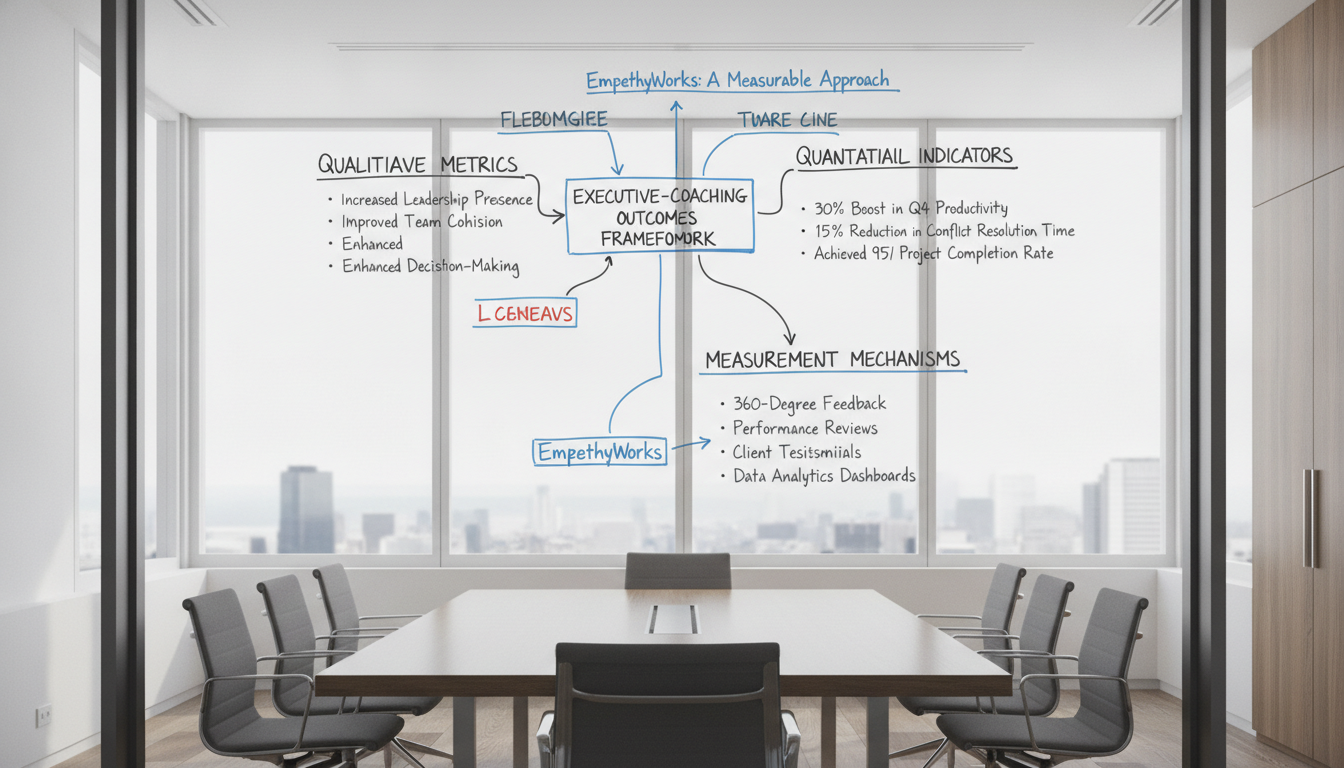
The question is not whether executive coaching can be measured. The better question is: measured against what, by whom, and in the reality of a leader's working week?
Leaders often arrive at coaching with a knotty issue rather than a clean development goal. A difficult conversation they keep postponing. A senior team that has stopped saying what it thinks. A new role that demands a different kind of authority. A change programme where people need both clarity and care.
These are not solved by motivational language. They need reflection, challenge and action connected to the actual workplace. A measurable outcomes framework gives that work shape without pretending leadership can be reduced to a score.
Start with a leadership situation, not a personality label
Generic coaching goals are hard to use. “Be more strategic” and “improve communication” may point in the right direction, but they do not tell a leader what to do differently on Tuesday morning.
Begin with one real leadership situation. Describe the people involved, the decision or tension at stake, and what is currently happening. Then identify the behaviour that needs to change.
For example:
“In senior-team meetings, I want to address disagreement directly rather than soften the issue or take it away for private conversations afterwards.”
That statement gives coaching somewhere to go. It creates a specific context, an observable action and a basis for reflection. It also leaves room for the important question: what makes this hard for the leader right now?
Build the framework around four kinds of evidence
Leadership outcomes are rarely captured by one number. A stronger framework uses more than one source of evidence, while keeping the process proportionate and confidential.
1. Personal insight
What has the leader understood about their own patterns, assumptions and impact? This is not an exercise in self-criticism. It is about seeing more clearly what they bring into challenging situations.
2. Observable behaviour
What will colleagues notice being different? This might be clearer decisions, better listening, more direct challenge, more consistent follow-through or a different way of handling conflict.
3. Workplace application
What real issue will the leader work on during the coaching period? A live leadership challenge stops development becoming separate from the work that matters.
4. Reflection from others
Where appropriate, a manager, peer or trusted colleague can offer focused feedback on the agreed behaviours. Keep the questions simple. Ask what they have seen, what has changed and what still needs attention.
Make outcomes specific enough to review
A useful outcome has a starting point, a practical shift and a way to check progress. It does not need to be complicated.
Starting point
What is happening now? What is the cost of leaving it as it is?
Desired shift
What will the leader do, say or decide differently in a real situation?
Review evidence
What will show progress: reflection, feedback, decisions, actions or a completed leadership challenge?
The point is not to manufacture certainty. Leadership is human work. Context changes. Other people have agency. But leaders can still be clear about the commitments they are making, the behaviour they are practising and the evidence they will return to.
Use a diagnostic as the beginning, not the verdict
A leadership assessment can give a leader language for patterns they have felt but not yet named. It can surface strengths, pressure points and possible blind spots. On its own, though, an assessment does not change how someone leads.
The value comes in the interpretation. What does the diagnostic mean for this person's role, relationships and current challenge? Which findings matter now? What is useful to test in practice? A bespoke report and a thoughtful coaching conversation can turn information into a focused development agenda.
Review progress without turning coaching into performance management
Coaching needs confidentiality. It also needs accountability. Those two things can sit together when the boundaries are clear from the start.
The leader owns the coaching conversation and their personal reflections. The organisation can agree the broad purpose of the development, the workplace challenge being addressed and the practical outcomes that matter. A review can then focus on commitments, learning and next steps, rather than demanding access to confidential detail.
A good review asks direct questions. What has changed in the way you lead? What evidence supports that? Where are you still avoiding the hard work? What will you keep practising after the formal coaching period ends?
What a practical outcomes framework can look like
For a leader dealing with a fractured senior team, an outcomes framework might identify a live challenge: rebuild more honest and accountable team conversations.
- Personal insight: recognise the tendency to avoid conflict in the name of keeping the peace.
- Behavioural commitment: name difficult issues in team meetings and ask for views before offering a solution.
- Applied action: lead a conversation about one unresolved team tension, with clear agreements and follow-up.
- Review evidence: reflect on the conversation, review agreed actions, and seek focused feedback from relevant colleagues.
This is not a template to impose on every leader. It is a way to make development visible and grounded. The measures should fit the person, the role and the work they need to do.